
Zirconia Dental Crowns
Natural appearance, durable restorations
Zirconia crowns in Kuşadası are a metal-free fixed restoration option planned with appearance, durability and function in mind. The existing condition of the teeth, the bite and aesthetic expectations are considered alongside a digital assessment.
Digital impressions
CAD/CAM manufacturing
Personalised smile planning

Colour · shape · function planned together
What are zirconia crowns?
Although the term “zirconia veneers” is common in everyday speech, most of the restorations described are actually
zirconia crowns or zirconia bridges.
Crowns that cover the tooth may be used for extensive loss of tooth structure, large fillings, changes in colour or shape, or broader aesthetic rehabilitation. In selected cases involving missing teeth, zirconia bridges supported by neighbouring teeth can be planned.
Not every aesthetic case requires zirconia crowns. For front teeth requiring minimal preparation, alternatives such as E.max laminate veneers are also considered.

The aim is not simply whiter teeth.
Zirconia treatment is considered in relation to the existing tooth structure, bite, missing teeth, discolouration and aesthetic expectations.
Marked discolouration
May be considered when whitening or more conservative treatments cannot adequately correct discolouration.
Teeth with large fillings
Depending on the amount of sound tooth structure remaining, a crown may be a more appropriate restoration.
Broken or worn teeth
May be used when the tooth shape and bite need to be restored.
Existing crowns and bridges
An option for replacing existing restorations that need renewal for aesthetic or functional reasons.
Missing teeth
In suitable cases, tooth-supported or implant-supported zirconia bridges can be planned.
Comprehensive smile rehabilitation
May be considered when shape, colour and bite need to be changed across several teeth.
Zirconia is not a single type of treatment.
The same material can be used for crowns, bridges or fixed implant-supported restorations to meet different clinical needs.

Zirconia crown
Covers a prepared tooth to restore its shape, colour and function.

Zirconia bridge
Where suitable supporting teeth are present, a fixed bridge may replace the missing tooth or teeth.

Implant-supported zirconia
Zirconia may be used for fixed restorations ranging from single implants to implant-supported bridges.

A good zirconia restoration should not simply look white.
For a natural result, tooth length, width, surface texture, translucency, gumline and facial proportions are considered alongside colour.
Tooth shape is planned in relation to facial features.
An excessively opaque, uniform shade is avoided.
The bite and anterior guidance are assessed alongside aesthetics.
A preference for a natural smile or a more pronounced smile makeover is taken into account.
How many teeth receive zirconia crowns in smile design?
The same number of crowns is not appropriate for every patient. A plan is based on the smile line, number of visible teeth, existing restorations, missing teeth and bite.


Hollywood smile or a more natural smile?
There is no single “correct” tooth shape or shade. Some patients want a brighter, more symmetrical appearance, while others prefer to preserve small individual characteristics.
Softer shades and individual tooth shapes
The goal is a harmonious appearance with facial features, avoiding an artificial look.
More regular shapes and lighter shades
A stronger emphasis on symmetry and a more defined smile makeover can be planned.
How is the shade of zirconia teeth chosen?
Choosing the whitest shade does not always give the most natural result. Skin tone, eye colour, natural teeth, lip shape and patient preferences are considered together.
✓Skin tone and facial features
✓Smile line
✓Number of restorations
✓Desired translucency
✓Personal preference

Natural appearance involves more than whiteness
From digital impressions to CAD/CAM manufacturing
Digital records help plan tooth shape, the bite and restoration design in a controlled manner.

The teeth, gums, existing restorations and bite are assessed.
Digital records of the teeth and bite are taken.
The restoration shapes and contact points are designed digitally.
The zirconia restorations enter the digital manufacturing process.
Shade, shape, fit and bite are checked.
Are temporary teeth used during treatment?
During extensive crown and bridge treatment, temporary restorations may be used when necessary until the final restorations are ready.
Helps protect prepared teeth.
Maintains an aesthetic appearance in daily life.
Allows clinical assessment of the final tooth shapes.


Is root canal treatment required for zirconia crowns?
No. Having a zirconia crown does not in itself mean root canal treatment is needed.
The aim is to preserve the pulp in vital, healthy teeth whenever possible. Root canal treatment is considered only when clinically indicated, such as decay, large existing restorations, pulp disease or a problem identified during treatment.
The idea that “every tooth receiving a crown needs its nerve removed” is incorrect.
Zirconia is strong, but the bite still needs careful planning.
Clenching and grinding can place high forces not only on restorations but also on natural teeth, implants and jaw joints.
The aim is to avoid excessive loading of the restorations.
Wear surfaces and clenching habits are taken into account.
May help protect the restorations in suitable patients.

Zirconia is not the only option for every case.
The appropriate material depends on tooth location, tooth structure, aesthetic goals and the type of restoration planned.
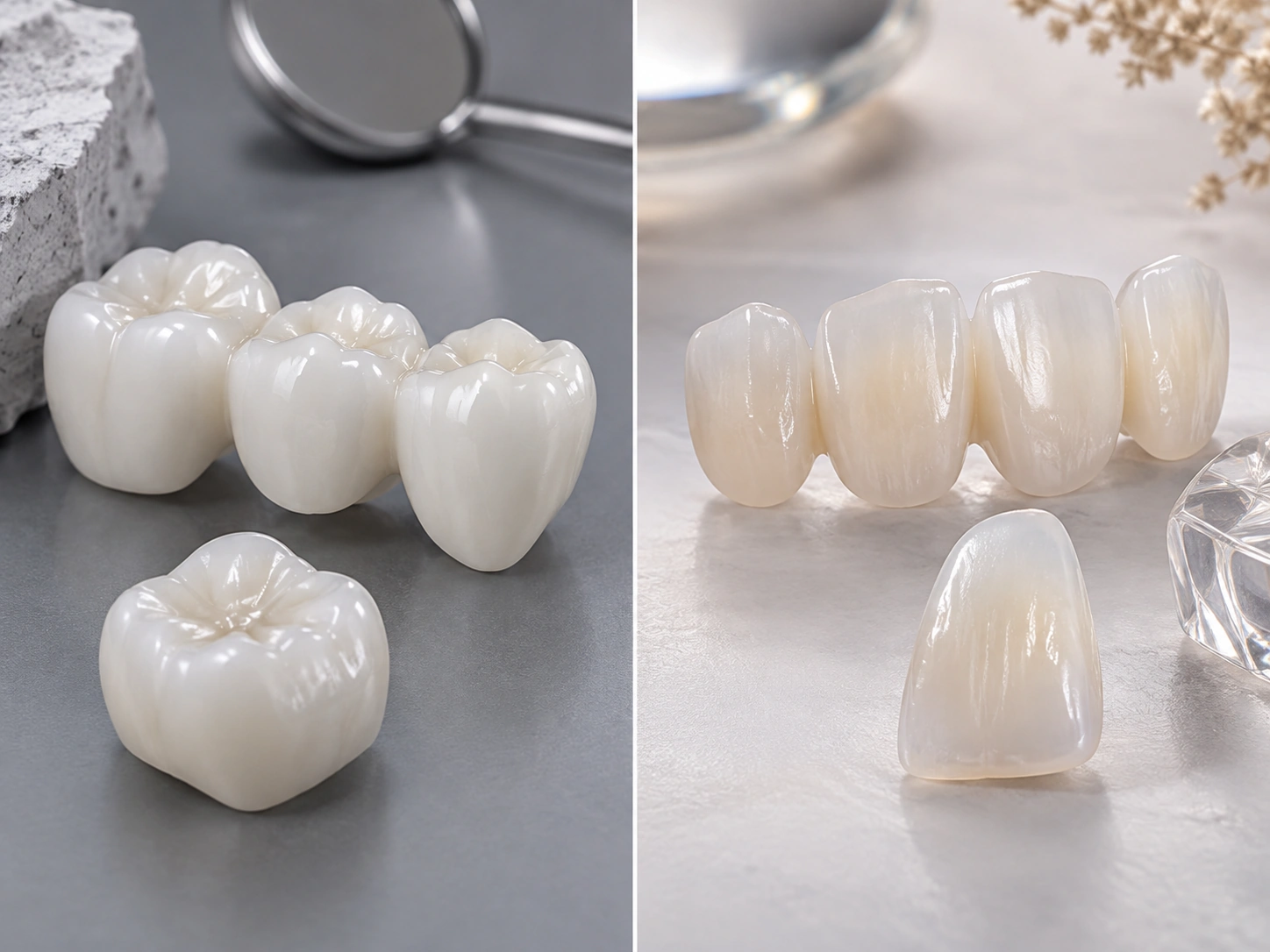
Zirconia or E.max?
E.max is a strong option particularly for aesthetic laminate veneers requiring minimal preparation. Zirconia is often considered for crowns, bridges, posterior restorations and more extensive rehabilitation.

Zirconia or porcelain-fused-to-metal?
Zirconia does not contain a metal framework. It may therefore be preferred in the aesthetic zone when patients wish to avoid the optical effects sometimes caused by a metal substructure.
Treatment can be planned in advance for international patients.
You can send photos of your teeth and an existing panoramic X-ray before travelling. This allows a preliminary assessment of possible crowns, bridges and treatment scope.
Photos and X-ray
Preliminary assessment
Clinical examination
Digital planning
For many smile makeover cases, the clinical stages of zirconia treatment can be planned over approximately 3–5 days. The exact duration depends on the number of procedures and any additional treatment required.

Meet the team planning your treatment

Dr Mehmet Köse, Prosthodontist
Planning zirconia crowns and bridges involves not only tooth shade but also remaining tooth substance, gum relationships, the bite and long-term maintenance of the restoration.

Dr Fatma Köse
She contributes to clinical assessments, identifying preventive and restorative treatment needs and coordinating the patient’s treatment and follow-up.
More about zirconia treatment
Read our guides on the treatment process, costs, smile design and digital dentistry.
Are zirconia crowns painful? How does treatment proceed?
Learn about tooth preparation, digital impressions, temporary teeth, try-in and final restorations.
Zirconia crown prices in Kuşadası, 2026
Find out how the number of teeth, treatment scope and additional procedures can affect the total cost.
How is smile design planned in Kuşadası?
Learn how smile lines, visible teeth, shades and shapes are assessed.
What are E.max veneers and when are they recommended?
Compare the different clinical uses of E.max veneers and zirconia crowns.
What are digital impressions? How do they differ from conventional impressions?
Learn about intraoral scanning in the planning of zirconia crowns and bridges.
Can teeth grinding affect zirconia restorations?
Learn about bruxism, bite forces and how a night guard may help protect restorations.
Common questions about zirconia dental crowns
Are zirconia veneers and zirconia crowns the same thing?
Most restorations commonly called “zirconia veneers” are technically zirconia crowns.
Can veneers be made from zirconia?
For minimally prepared veneers on front teeth, lithium disilicate ceramics such as E.max are generally among the more suitable material options.
How long does zirconia treatment take?
Depending on the number of teeth and additional treatment, smile makeover cases can often be completed within approximately 3–5 clinical days.
Do all teeth need root canal treatment before zirconia crowns?
No. Root canal treatment is considered only for teeth where it is clinically necessary.
Are teeth reduced when placing zirconia crowns?
Teeth receiving crowns need controlled preparation to create space for the restoration. The amount of reduction depends on the existing condition of each tooth.
Can a zirconia bridge replace missing teeth?
A zirconia bridge can be planned when appropriate supporting teeth are available. The implant option should also be assessed.
Which is more suitable: zirconia or E.max?
The material should be chosen according to the restoration type. E.max is often preferred for aesthetic veneers, while zirconia can be used for crowns, bridges and more extensive restorations.
Will zirconia teeth look unnaturally white?
Not necessarily. Both lighter shades and more natural colours and translucencies can be selected.
Can I get zirconia crowns if I grind my teeth?
In patients with bruxism, the bite and distribution of forces must be assessed carefully. A night guard may be recommended in suitable cases.
How do I care for zirconia crowns?
As with natural teeth, regular brushing, interdental cleaning and dental check-ups are required. Special cleaning aids may be needed beneath bridges.
Is zirconia the right choice for you?
Send photos of your teeth from the front, right and left sides, along with a panoramic X-ray if available. We can then make a preliminary assessment of zirconia crowns, bridges or alternative treatments based on your situation.