
Can You Have E.max Veneers If You Have Bruxism?
E.max veneers and bruxism: Clenching or grinding does not automatically rule out E.max veneers, but it can increase the forces placed on them and the risk of fracture or debonding. When planning E.max veneers in Kuşadası, we therefore assess the severity of bruxism, the bite, the amount of available enamel and whether a night guard may be needed.
Does bruxism prevent E.max veneer treatment?
Not always. E.max veneers may be considered in patients with mild or controlled bruxism when the bite is suitable and sufficient enamel is available. Severe clenching, marked tooth wear, edge-to-edge contact or excessive forces on the front teeth, however, require a more cautious assessment.
For patients with bruxism, the aim is not only to create an attractive smile but also to manage the forces that veneers will face over time as far as possible.
What matters most is the severity of bruxism, the bite pattern, existing tooth wear and the forces that the restorations will need to withstand.

How can teeth clenching affect E.max veneers?
Bruxism can expose the front teeth to higher and repeated forces than usual. The direction and duration of these forces may affect how veneers perform.
Risk of fracture
Excessive stress may be concentrated on the ceramic, particularly at thin edges or areas of heavy contact.
Risk of debonding
Unfavourable force directions can strain the adhesive bond between the veneer and the tooth.
Edge wear
Heavy contact with opposing teeth can gradually wear both natural teeth and restorations.
Changes in the bite
Existing wear may affect bite height and the distribution of contact points, influencing treatment planning.
Muscle fatigue
Intense clenching may also affect the chewing muscles; these findings are taken into account during clinical assessment.
Need for protection
In suitable cases, a night guard may be planned to help protect the restorations.
Can a night guard protect E.max veneers in patients with bruxism?
For suitable patients, a night guard may help reduce the direct loading of veneers during sleep. However, it does not eliminate bruxism; it is an additional measure intended to protect restorations.
The guard’s design, thickness and contact points should be customised to the patient’s bite. Ready-made or standard guards may not offer the same protection for every patient.
Why is the bite checked before E.max veneers?
For patients with bruxism, the functional contacts on veneers matter just as much as their appearance. An edge-to-edge bite, heavy contacts when moving the jaw forward, or unbalanced sideways movements can place unnecessary stress on the ceramic.
Therefore, tooth length, incisal edge position and contact points are planned together with the bite.

Which bruxism cases require more careful E.max veneer planning?
Risk is assessed by considering several clinical signs together, rather than relying on a single finding.
Severe wear
Marked shortening or flattening of front tooth edges may call for a more comprehensive restorative plan.
Edge-to-edge bite
When the edges of upper and lower front teeth meet directly, veneer margins may be exposed to high forces.
Insufficient enamel
A lack of adequate enamel for bonding can influence veneer planning.
Why is enamel even more important in patients with bruxism?
Adhesive bonding to enamel is an important advantage for the long-term stability of E.max veneers. Preserving sound enamel is particularly valuable when higher forces are present, as in bruxism.
The aim is therefore to avoid unnecessary tooth reduction, use minimal preparation where suitable, and keep veneer margins on enamel as far as possible.

Can E.max veneers be used with mild teeth clenching?
E.max veneers may be considered if there is sufficient enamel support, a balanced bite and manageable forces. The patient’s habits and possible need for a night guard should still be assessed.
Does severe bruxism change the treatment approach?
Yes. With marked wear, strong muscle forces or heavy contact on the front teeth, a broader assessment of the bite and restorative space may be needed rather than simply fitting veneers.

Why are check-ups important after veneers in patients with bruxism?
Bruxism may change over time. Veneer margins, adhesive bonds, bite contacts and the condition of the night guard should therefore be reviewed at regular appointments.
Identifying small changes in contacts or wear on the guard early may help protect restorations.
Is a full smile makeover possible with bruxism?
Bruxism does not automatically rule out a full smile makeover, but material selection, tooth lengths and bite relationships require more careful planning. Changing only the appearance of the front teeth may not be enough in some cases.
Particularly when wear is pronounced, a more comprehensive plan may be needed after assessing vertical dimension, posterior support and existing restorations.
What do we check for bruxism before E.max veneers?
The following clinical findings may influence the veneer treatment plan.
How do we plan E.max veneers for patients with bruxism in Kuşadası?
We first assess tooth wear, the bite, the amount of remaining enamel and the history of previous restorations. In suitable cases, E.max veneers may be planned with minimal preparation and a custom-made night guard; higher-risk cases may require alternative restorations or more comprehensive occlusal planning.
Common questions about bruxism and E.max veneers
Can you have E.max veneers if you have bruxism?
Yes, in suitable cases. The decision is based on the severity of bruxism, the bite, available enamel and the forces the restorations will face.
Can teeth grinding break E.max veneers?
Severe, uncontrolled forces can increase fracture risk. Careful case selection, appropriate design and protective measures aim to reduce this risk.
Will a night guard completely protect my veneers?
A night guard may help, but it cannot eliminate all risk or stop bruxism. Regular use and follow-up are important.
Can E.max veneers be used with an edge-to-edge bite?
This bite pattern may subject veneer edges to high forces and needs careful assessment. Alternative treatment plans may suit some patients better.
Does bruxism mean more tooth reduction is needed?
No. The aim is to preserve as much sound enamel as possible. Preparation depends more on tooth position, existing restorations and veneer design than on bruxism itself.
Is zirconia safer than E.max for bruxism?
Material selection is not based on bruxism alone. Tooth structure, aesthetic location, required preparation, the bite and restoration type must all be considered.
Can bonding be done in patients with bruxism?
It may be possible for small, carefully selected cases, but intense clenching and edge-to-edge contacts increase the risk of chipping and debonding.
Can Botox for bruxism protect veneers?
Masseter Botox may help reduce muscle activity in some patients, but it is not considered a stand-alone standard solution for protecting veneers. Clinical assessment is needed.
How long should I wear a night guard after veneers?
Long-term use may be needed for as long as bruxism persists. The wearing schedule and need for replacement are determined during follow-up.
Can I have a preliminary assessment for bruxism before travelling to Kuşadası?
Photos of the teeth and existing dental records can provide an initial estimate. A definitive plan is made after an in-person examination and bite assessment.
More guides about E.max veneers
Explore other guides on suitability, preparation, durability, care and material comparisons.

Who Is Suitable for E.max Veneers?
Review case selection criteria, including enamel availability, the bite and aesthetic expectations.
Read the guide →
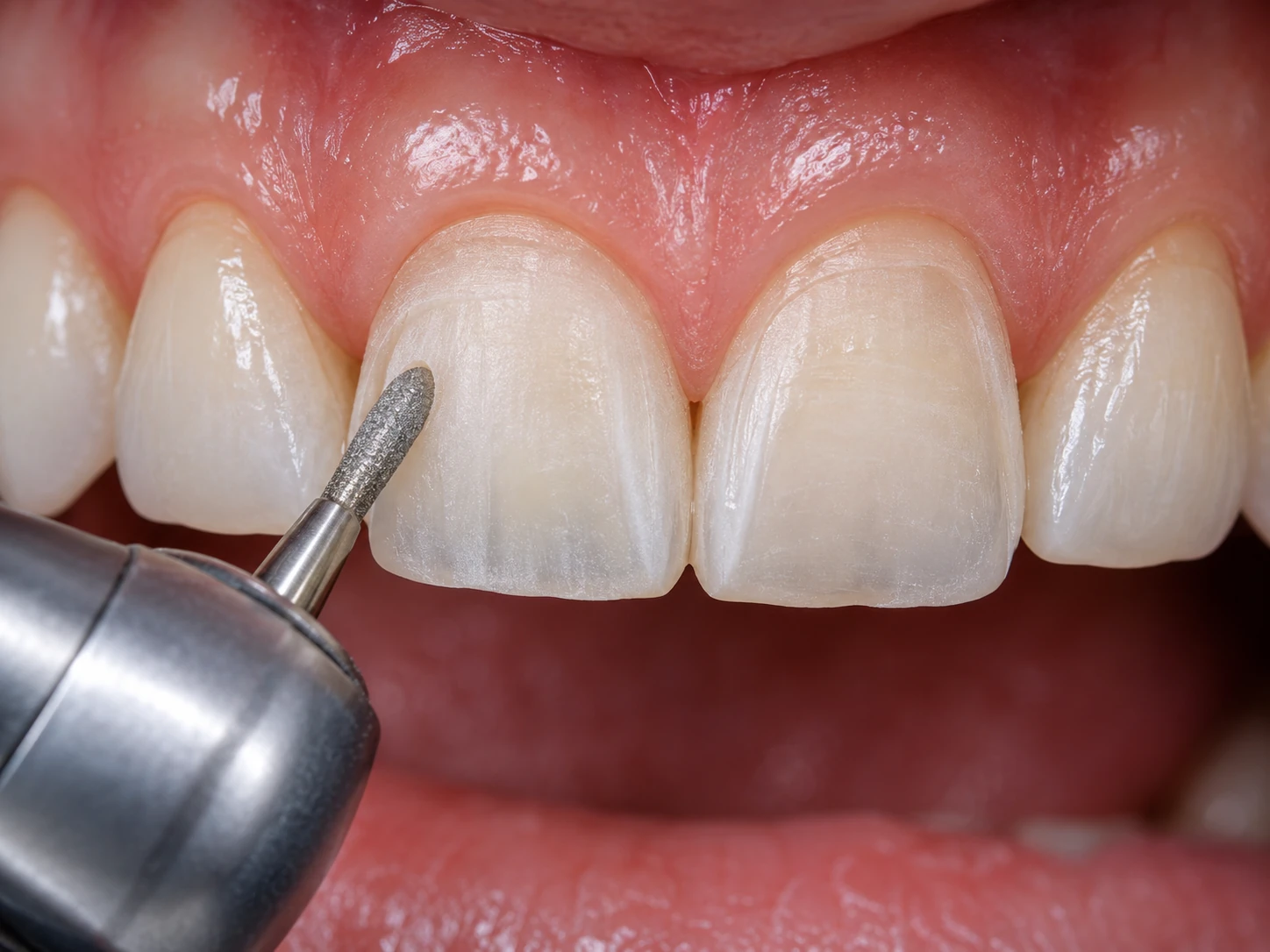
How Much Tooth Reduction Is Needed for E.max Veneers?
Learn what minimal preparation means and how enamel can be preserved.
Read the guide →

How Long Do E.max Veneers Last?
Explore how enamel, bonding, the bite, bruxism and care affect long-term results.
Read the guide →

Can E.max Veneers Break or Come Off?
Learn which factors influence fracture, cracking and debonding risks.
Read the guide →

E.max Laminate Veneers or Zirconia Crowns?
Compare E.max and zirconia in terms of preparation, appearance and durability.
Read the guide →

E.max Veneers or Bonding?
Explore material selection for small local corrections and extensive smile makeovers.
Read the guide →
Let us assess whether E.max veneers are suitable for you if you have bruxism
If you have worn teeth, clench or grind, send us photos of your teeth. During an initial assessment we can discuss whether E.max veneers might be suitable, the risks associated with your bite and whether a night guard may be needed.