
Can a Chipped Tooth Be Repaired with Composite?
A composite filling restores a tooth with tooth-coloured resin-based material after decay or damaged tissue has been removed. The aim is not simply to fill a cavity, but to preserve as much sound tooth structure as possible, rebuild contact points and chewing anatomy, check the margins and maintain tooth function. The result depends on cavity size, remaining tooth structure, isolation, bite forces and oral hygiene. Some small and moderate tooth fractures can be repaired directly with composite. However, the extent of the fracture, proximity to the pulp, tooth position and bite forces determine the treatment choice.
Can a Chipped Tooth Be Repaired with Composite?
Yes. Small incisal fractures in front teeth and some fractured cusps in back teeth can be repaired with composite fillings or bonding. Extensive fractures, substantial loss of tooth structure or cracks extending towards the root may require a different restorative or endodontic approach.
A definitive decision is not made from photographs or a single complaint alone. The clinical examination, radiographic findings if needed, existing restorations and the patient’s expectations are considered together. This helps avoid unnecessary removal of tooth structure and anticipate long-term maintenance.
General information online cannot replace a clinical examination. Two teeth that look alike may need different treatments.

Which factors influence the treatment decision?
A composite filling restores a tooth affected by decay or tissue loss using a tooth-coloured resin after the affected tissue is removed. The aim is to conserve healthy tooth structure, recreate contact points and chewing anatomy, check margins and maintain function. Success depends on cavity size, remaining tooth tissue, isolation, bite forces and oral hygiene.
Extent of fracture
Smaller defects are generally better suited to composite
Proximity to the pulp
The nerve may be affected
Tooth position
Front and back teeth carry different loads
Bite
Contacts on the new restoration are checked
Crack line
Extension towards the root is assessed
Remaining tooth structure
Helps determine the restoration

How is a chipped front tooth repaired with bonding?
The fractured edge is cleaned, the enamel is prepared according to the adhesive protocol, and tooth-coloured composite is shaped in layers. The shade, translucency and incisal-edge contour are matched to adjacent teeth, followed by finishing and polishing.
A definitive decision is not made from photographs or a single complaint alone. The clinical examination, radiographic findings if needed, existing restorations and the patient’s expectations are considered together. This helps avoid unnecessary removal of tooth structure and anticipate long-term maintenance.

Does a broken tooth need root canal treatment?
Not every fracture requires root canal treatment. If the damage is limited to enamel or dentine, the pulp may be preserved. Root canal treatment may be considered if the pulp is exposed, prolonged severe sensitivity develops or the pulp has been irreversibly affected. X-rays and pulp vitality tests are important.
You can read more about the main treatment on our Composite / White Fillings in Kuşadası page.
Why might a filling alone be insufficient for a large fracture?
When much of the tooth is missing, there is less sound structure to retain the composite and withstand chewing forces. Particularly in back teeth with inadequate cusp support, a more extensive restoration such as an onlay or crown may be considered to reduce fracture risk.
Regular check-ups assess the restoration’s surface, margins, gum health and bite to identify minor problems before they become more serious.
Why is the bite checked after repairing a broken tooth?
Heavy contact on an incisal edge or chewing surface may increase the risk of another fracture. Contacts are assessed both when biting together and during jaw movements. A protective approach may be necessary if the patient has bruxism.

What circumstances change the treatment plan?
Small fractures of front teeth may be suitable for bonding.
In deep fractures, the pulp and root must be assessed.
Repeated fractures require investigation of the bite, not just the material.
A composite filling restores a tooth affected by decay or tissue loss using a tooth-coloured resin after the affected tissue is removed. The aim is to conserve healthy tooth structure, recreate contact points and chewing anatomy, check margins and maintain function. Success depends on cavity size, remaining tooth tissue, isolation, bite forces and oral hygiene.
A definitive decision is not made from photographs or a single complaint alone. The clinical examination, radiographic findings if needed, existing restorations and the patient’s expectations are considered together. This helps avoid unnecessary removal of tooth structure and anticipate long-term maintenance.
After dental trauma, the effect of the impact on the pulp and root must be assessed, not just the size of the missing fragment. A tooth that looks only slightly chipped may have a root crack, mobility or pulp damage. Clinical examination and, when indicated, radiographs are particularly important after recent trauma.
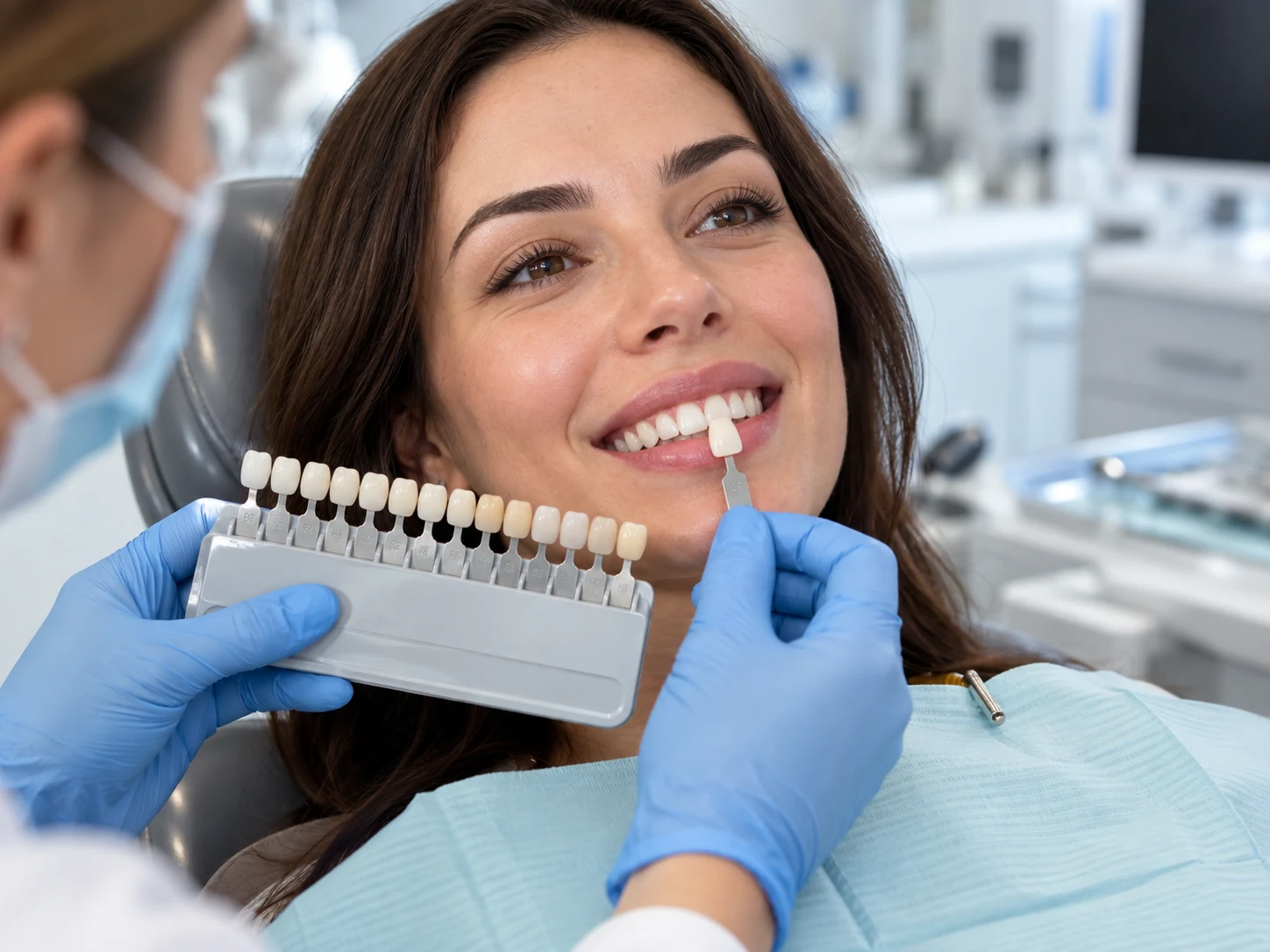
When repairing a front tooth with composite, the translucency and surface texture of the incisal edge matter as much as the shade. A single opaque colour can make the repair visible. Layering and final polishing aim to reproduce how the adjacent tooth reflects and transmits light.
If a repaired fracture keeps breaking, repeatedly adding more composite may not be appropriate. The distribution of front-tooth contacts, bruxism and habits such as nail biting or chewing pens should be assessed. Without addressing the underlying cause, repeat repairs may have a limited lifespan.
Long-term success is not measured only by appearance on the first day. The restoration also needs to be easy to clean, compatible with the gums, appropriately aligned with opposing teeth and repairable when necessary. Follow-up appointments therefore assess function and biological compatibility as well as appearance.
Cases grouped under the same heading may differ substantially in clinical terms. The tooth involved, the amount of existing filling material, the patient’s age, chewing habits and desired changes all affect the plan. Standard lifespan figures or one-size-fits-all recommendations online cannot replace a personal examination.
Daily habits after treatment also influence the result. Avoiding cracking hard objects with the teeth, maintaining oral hygiene and arranging an early review if pain, roughness, discolouration or chipping develops can help protect the restoration. Early detection may allow a more conservative correction.
Check-up intervals are based on restoration size, symptoms and individual risk factors.
For front-tooth aesthetic planning, our Smile Design in Kuşadasıpage may help; for shade planning, see our professional teeth whitening page.
Small chip
Direct composite/bonding
Extensive tissue loss
Onlay or crown
Pulp involvement
Root canal treatment may be necessary
Rather than removing sound tooth tissue or restorations unnecessarily for cosmetic reasons, we consider clinical need alongside the patient’s expectations.
Which signs should be evaluated further?
Pain, fractures, discolouration or bite problems should not be treated as purely cosmetic concerns; their underlying causes must be identified.
How do we assess these cases at Adaport Dental Clinic?
At Adaport Dental Clinic, we do not decide how to treat a broken tooth from a photograph alone. We assess the fracture depth, pulp, root and remaining tooth structure through a clinical examination and X-rays where needed. Whenever possible, we select the most conservative restoration that preserves the natural tooth.
A definitive decision is not made from photographs or a single complaint alone. The clinical examination, radiographic findings if needed, existing restorations and the patient’s expectations are considered together. This helps avoid unnecessary removal of tooth structure and anticipate long-term maintenance.
An in-person oral examination is essential for definitive planning. You can send existing X-rays and photographs of your teeth through WhatsApp for a preliminary assessment.
Common questions about repairing a broken tooth with composite
Can a broken tooth be repaired with a filling?
Many small to moderate fractures can be repaired with composite.
Can a chipped front tooth be repaired with bonding?
Yes. Suitable fractures can be restored to closely resemble the natural shape.
Is root canal treatment necessary?
It may be necessary if the pulp is affected, but not for every fracture.
Can the tooth fracture again?
The bite, bruxism and fracture size affect the risk.
Is a crown needed for a large fracture?
An onlay or crown may be considered if little tooth structure remains.
Is a broken tooth an emergency?
Early assessment is important in cases of severe pain, pulp exposure or trauma.
What does discolouration after a tooth fracture mean?
Pulp vitality may be affected and requires examination.
Can composite match the natural tooth colour?
Shade selection and layering aim for a natural match.
What happens if I have bruxism?
The risk of repeated fracture may increase, and a night guard may be needed.
Can the repair be completed in one visit?
Suitable direct composite repairs can usually be completed in one appointment.
More guides to composite bonding and white fillings
Explore our guides to bonding, white fillings, staining, durability, gaps between teeth, old restorations and chipped-tooth repair.

How Long Do Composite Fillings Last?
Read more about composite restorations, case selection, durability, aesthetics and clinical decision-making.
Read the Guide →

Is Pain or Sensitivity Normal After a Filling?
Read more about composite restorations, case selection, durability, aesthetics and clinical decision-making.
Read the Guide →
When Should an Old Filling Be Replaced?
Read more about composite restorations, case selection, durability, aesthetics and clinical decision-making.
Read the Guide →

Can Amalgam Fillings Be Replaced with Composite?
Read more about composite restorations, case selection, durability, aesthetics and clinical decision-making.
Read the Guide →

Composite Bonding or E.max Veneers?
Read more about composite restorations, case selection, durability, aesthetics and clinical decision-making.
Read the Guide →

Let’s assess the most conservative option for your tooth
Send us a photo of your teeth and an X-ray if available. We can discuss possible treatment options during an initial assessment, taking into account restoration size, remaining tooth structure, shade, bite and symptoms.