
E.max RestorationsLaminate veneer and crown options
E.max is a lithium disilicate all-ceramic material that can be used for different types of restorations, such as laminate veneers or full crowns, in suitable cases. The choice depends on the remaining tooth structure, aesthetic goals, bite and clinical condition of the tooth.
What is E.max and which restorations use it?
E.max is a lithium disilicate all-ceramic material system known for its aesthetic qualities and light transmission.
E.max can be considered particularly for laminate veneers and full crowns. A laminate veneer covers a limited area of the front of the tooth, whereas an E.max crown can provide full coverage for suitable teeth with more extensive loss of tooth structure. The choice depends on the remaining tooth tissue and functional needs, not only aesthetic preferences.
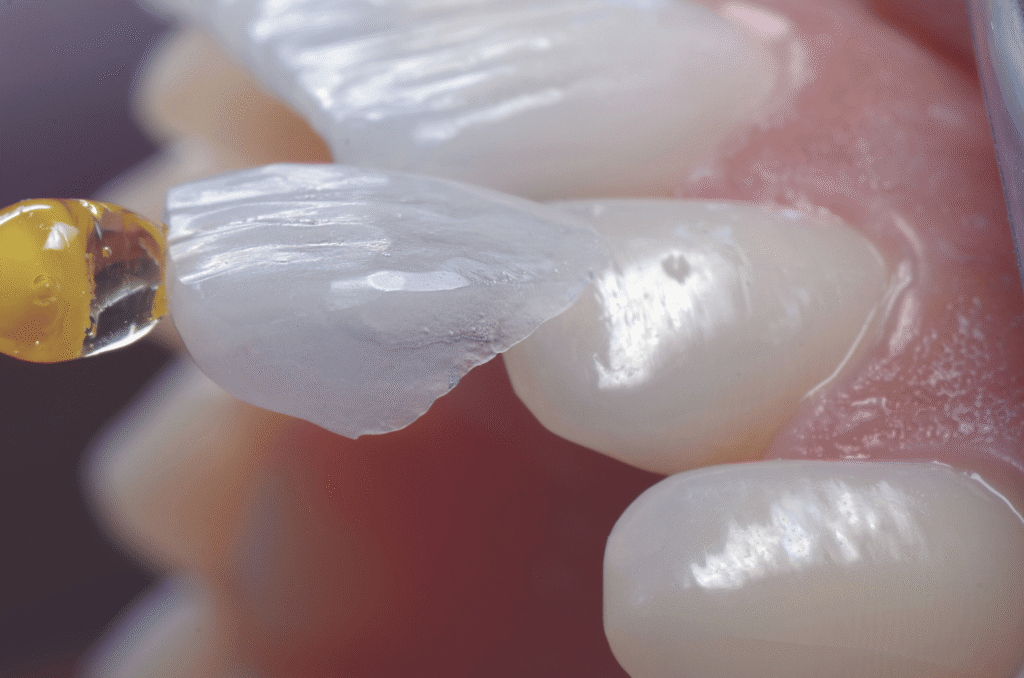
E.max restorations are mainly considered for the aesthetic zone.
The existing tooth structure, enamel, bite, discolouration, alignment and the patient’s aesthetic expectations are assessed together.
Tooth discolouration
May be considered for certain colour problems that cannot be sufficiently improved by whitening but do not require a crown.
Minor shape irregularities
Can help reshape short, narrow or asymmetrically shaped front teeth.
Gaps between teeth
May be planned to close small gaps between front teeth when the bite and tooth proportions are suitable.
Mild alignment issues
In selected minor irregularities not requiring orthodontics, the smile line may be improved with an appropriate restoration.
Worn teeth or small chips
May help restore the shape of front teeth when the enamel boundaries and bite are suitable.
Existing aesthetic restorations
May be an option when existing restorations in the front teeth need replacing because of their colour, shape or surface.
E.max is not a single type of restoration.
The amount of healthy remaining tooth structure and clinical requirements determine whether a veneer, partial restoration or full crown is planned.
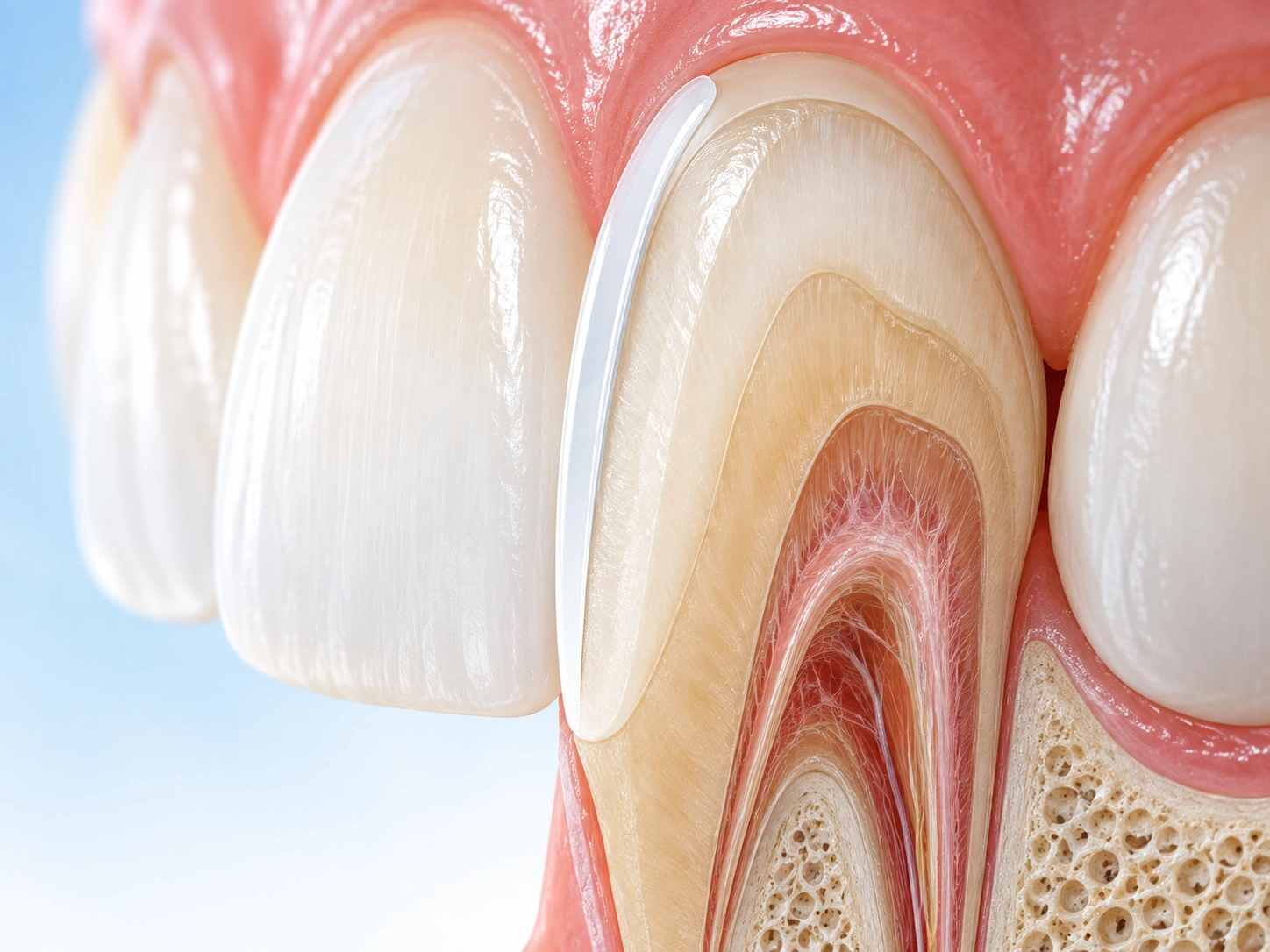
E.max laminate veneer
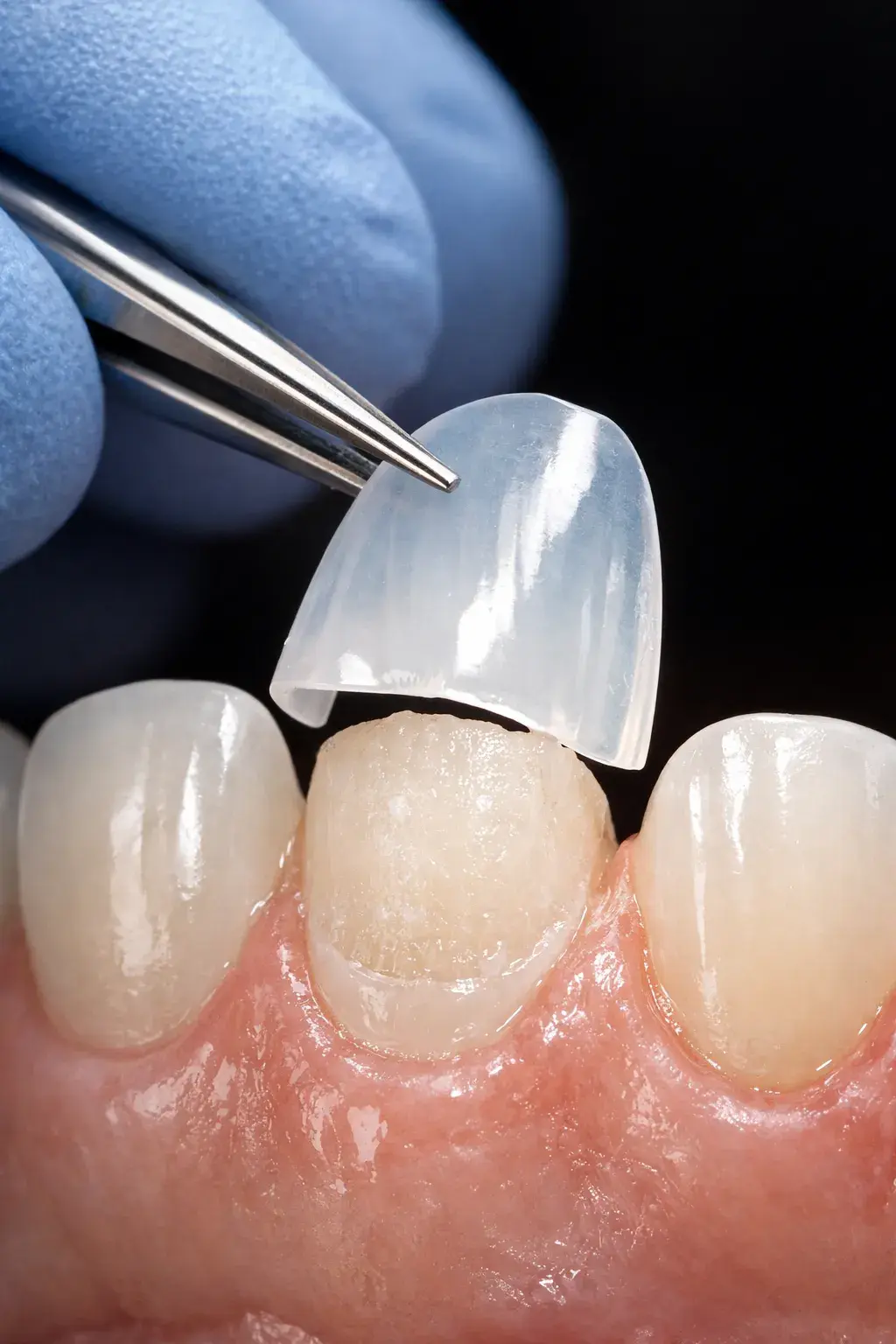
In suitable cases, thin ceramic restorations covering the front surface of the tooth can change its appearance.
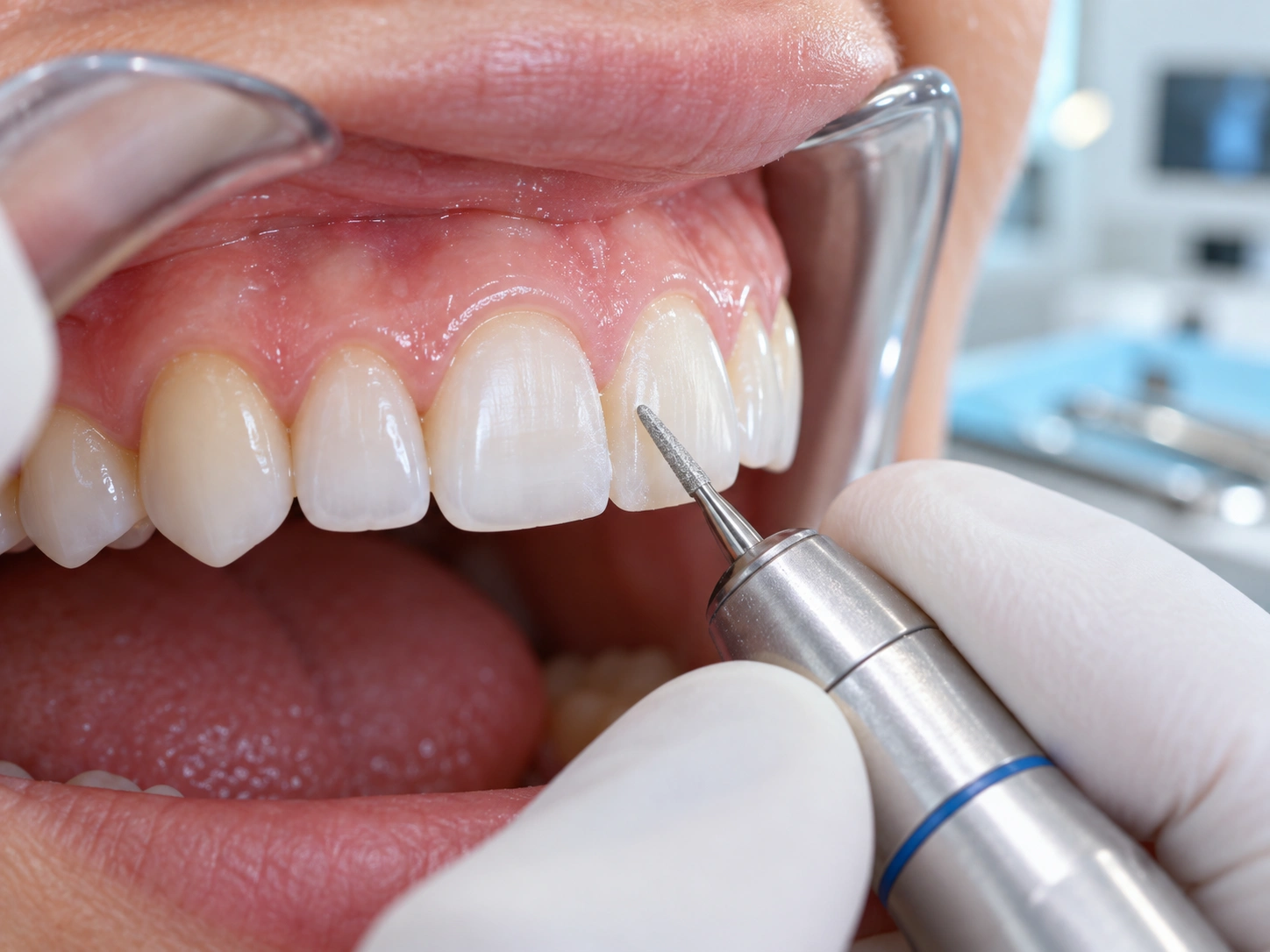
Minimal tooth preparation
Where enough enamel is present, carefully controlled and limited preparation is intended to make room for the restoration.

E.max crowns
For suitable teeth with more extensive structural loss, a full crown may be planned to cover the tooth all around.

The value of E.max is not just whiteness but how it interacts with light.
For a natural result, light transmission, surface texture, incisal-edge character, colour transitions and harmony with neighbouring teeth are considered together.
How many teeth receive E.max restorations in a smile design?
Not every patient needs the same number or type of E.max restorations. The smile line, number of visible teeth, remaining tooth structure and restorative needs guide a plan involving laminate veneers, crowns or a combination.


A more natural smile or a more defined smile makeover?
There is no single correct tooth shape or shade. The character of the restoration is planned around facial structure, lip line, natural tooth features and aesthetic preferences.
The aim is a subtle, natural harmony with neighbouring teeth.
Greater symmetry and a more noticeable aesthetic change can be planned.
How much tooth preparation is needed for E.max restorations?
Preparation depends on the type of restoration. In suitable laminate veneer cases, limited preparation of approximately 0.3–0.5 mm may be planned, while a full crown requires a different approach. Not every tooth is reduced by the same amount.
From digital planning to the final restoration
Digital records help plan veneer shape, proportions, bite and smile line in a controlled manner.

Teeth, gums, enamel, existing restorations and the bite are assessed.
Digital records of the teeth and bite are taken.
Tooth shape, length and smile line are planned digitally.
Necessary preparation is completed and E.max restorations are sent for laboratory fabrication.
After checking shade, shape, fit and bite, the restorations are bonded adhesively.
Are temporary teeth used with E.max restorations?
The need for temporary restorations depends on the amount of preparation, type of restoration and treatment scope. In multiple-veneer or crown cases, temporary restorations may help manage appearance, function and sensitivity.

Does an E.max restoration require root canal treatment?
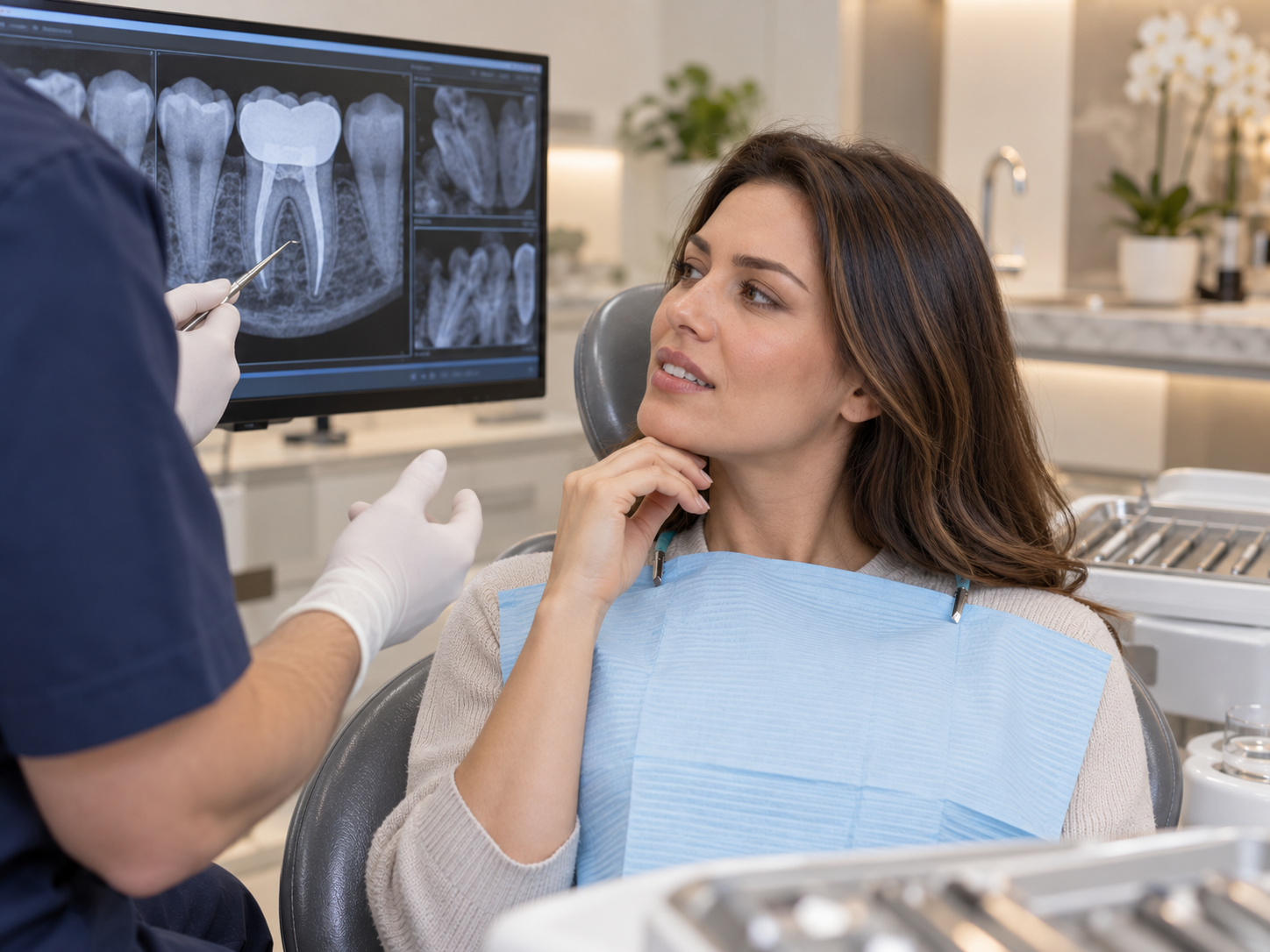
No. Choosing E.max does not in itself mean root canal treatment is needed. Root canal treatment is only considered when clinically indicated.
One aim of veneer treatment is to preserve healthy enamel and pulp tissue wherever appropriate. Root canal treatment is assessed separately only when decay, pulp disease, trauma or another clinical indication exists.
E.max is strong, but severe bruxism may increase the risks.
Clenching and grinding can increase the risk of cracks, fracture or stress on the adhesive bond of E.max veneers and crowns. Bite analysis is therefore important when choosing a restoration.
The aim is to avoid excessive forces on the veneers.
Wear facets and clenching habits are considered in the treatment plan.
May help protect restorations in suitable patients.

E.max is not the only option for every case.
The appropriate material is selected according to remaining tooth structure, restoration type, aesthetic expectations and bite forces.
E.max or zirconia?
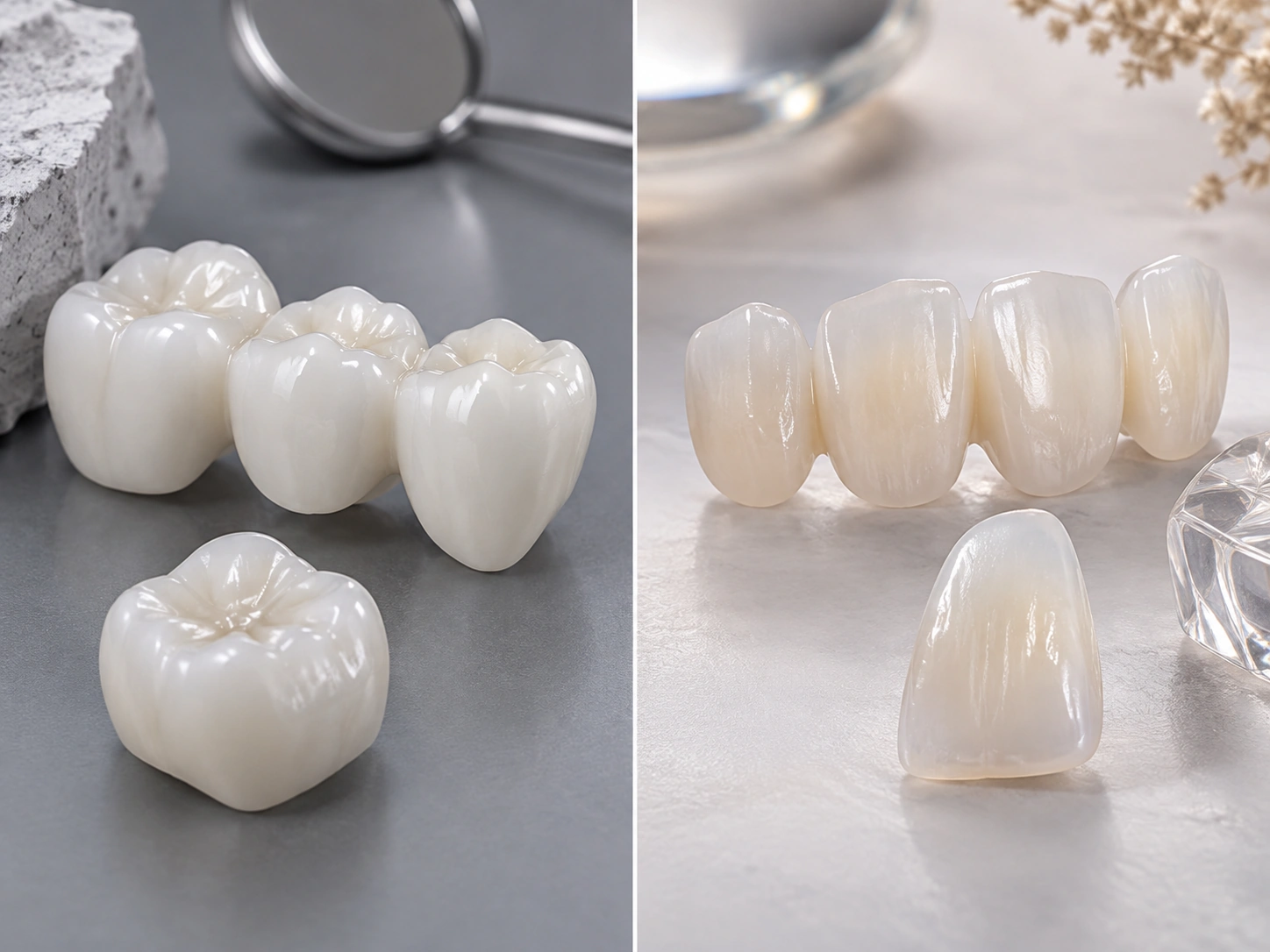
E.max is particularly suitable for selected aesthetic laminate veneer cases requiring minimal preparation. Zirconia is often considered for crowns, bridges, back teeth and more extensive rehabilitation.
E.max veneers or composite bonding?
Bonding may be a conservative choice for small shape adjustments and limited gaps. E.max veneers may offer a different aesthetic option when more extensive colour and shape changes are desired.
Treatment can be planned in advance for international patients.
You can send photos of your teeth and any panoramic X-ray before travelling. This allows a preliminary review of E.max laminate veneers, E.max crowns or alternative restorations.
Smile makeover cases involving E.max veneers can often be planned within approximately 3–5 clinical days. The exact duration depends on the number of veneers, preparation needs and any additional treatment.
Meet the team planning your treatment

Dr Mehmet Köse, Prosthodontist
Planning of E.max laminate veneers, E.max crowns, smile design, digital workflows and comprehensive aesthetic rehabilitation.

Dr Fatma Köse
Clinical examinations, restorative treatments, digital records and patient follow-up.
Detailed guides to E.max restorations
After completing the treatment pages, we will publish separate supporting E.max articles in this section.
Who is suitable for E.max veneers?
We will discuss how enamel, bite and aesthetic goals influence treatment decisions.
How much tooth reduction is needed for E.max veneers?
We will explain minimal preparation, no-prep approaches and case selection in detail.
How many days does E.max veneer treatment take?
We will explain digital planning, preparation, try-in and final bonding.
How long do E.max veneers last?
We will explain how care, bite and bruxism affect their lifespan.
E.max or zirconia?
We will compare the different uses of these materials through clinical examples.
How should E.max veneers be cared for?
We will cover brushing, interdental cleaning, night guards and regular check-ups.
Common questions about E.max restorations
What is E.max?
E.max is a lithium disilicate all-ceramic material system. In suitable cases it can be used for different restorations, including laminate veneers and full crowns.
Are E.max and laminate veneers the same thing?
E.max refers to the material, whereas a laminate veneer is a type of restoration. Lithium disilicate E.max ceramic can be used to make laminate veneers.
Do teeth need to be prepared for E.max veneers?
In suitable cases, limited preparation of approximately 0.3–0.5 mm may be required. The amount depends on tooth position, colour and the planned shape.
How long do E.max veneers last?
Lifespan depends on many factors, including oral care, bite forces, bruxism, bonding quality and regular check-ups.
Can E.max veneers break?
Ceramic restorations can fracture under high forces. Bruxism and unsuitable bite loads are particular risk factors.
Do E.max veneers change colour?
Ceramic itself is less prone to staining than composite materials, but the margins, natural tooth structure and surface care can affect appearance over time.
Does an E.max restoration require root canal treatment?
No. Root canal treatment is only considered when clinically necessary; choosing E.max alone is not a reason for it.
Can I have E.max veneers if I clench my teeth?
The bite must be assessed carefully in patients with bruxism. Severe clenching may make veneers riskier for some patients, and a night guard may be considered.
Does E.max or zirconia look more natural?
Both materials can produce aesthetic results. E.max offers high translucency in thin front-tooth restorations, but material selection depends on the individual case.
How many days does E.max veneer treatment take?
Depending on the number of veneers and other treatments, smile makeover cases can often be scheduled over approximately 3–5 clinical days.
Which E.max restoration is right for you?
Send photos of your teeth from the front and both sides, together with a panoramic X-ray if available. We can review E.max laminate veneers, E.max crowns, zirconia or other options in a preliminary assessment based on your existing teeth.